

Pakistan-China ties built on solidarity, mutual trust, and shared future: Senator Mushahid Hussain Sayed
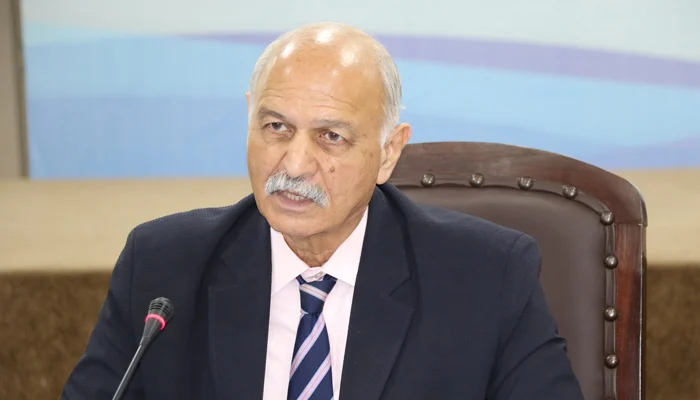
In an interview with Chinese media, former Pakistani Senate defense committee chairman and Pakistan-China Institute head Senator Mushahid Hussain Syed hailed Pakistan-China relations as a model of political trust and lasting cooperation, urging both nations to seize global political and economic shifts to deepen their strategic partnership. Reflecting on 74 years of diplomatic ties, from the Karakoram Highway to the China-Pakistan Economic Corridor (CPEC), he credited China’s early investments with improving Pakistan’s energy supply, connectivity, and job creation, while expanding CPEC into agriculture, IT, and green energy. Syed emphasized people-centered development, highlighting local employment, women’s participation, and rural uplift. He called for closer collaboration in AI, 5G, industrial relocation, critical minerals, and sustainable practices, recommending that Pakistan align with China’s priorities in electric vehicles, renewable energy, and climate resilience. Stressing the role of youth, he urged both countries to learn from each other’s strengths to build a shared future of peace, development, and prosperity.
ISLAMABAD, Aug. 15 (Xinhua) — The friendship between Pakistan and China is a model of political trust and enduring cooperation, said Mushahid Hussain Syed, former chairman of the Pakistani senate’s defense committee, calling for joint efforts to build a closer Pakistan-China community with a shared future in the new era.
Syed, who is also the chairman of the Pakistan-China Institute (PCI), said in a recent exclusive interview with Xinhua that the two countries should seize the opportunities brought about by global political and economic changes to deepen their strategic partnership further.
Reflecting on the 74 years of diplomatic ties, Syed said that from the friendship forged by the older generation of leaders, to the construction of the Karakoram Highway, also known as the China-Pakistan Friendship Highway, and the launch of the China-Pakistan Economic Corridor (CPEC), the two sides have established an unbreakable all-weather strategic cooperative partnership.
Launched in 2013, CPEC, a flagship project of the China-proposed Belt and Road Initiative, is a corridor linking Gwadar Port in Pakistan with Kashgar in Northwest China’s Xinjiang Uygur Autonomous Region, which highlights energy, transport, and industrial cooperation in the first phase, while in the new phase it expands to fields of agriculture and livelihood, among others.
Before the launch of CPEC, Pakistan faced security challenges and a lack of foreign investment, the former senator noted. “China was the first to invest in Pakistan, showing firm confidence in our future and enhancing our position on the global investment map,” he said.
“CPEC has improved connectivity, eased our electricity shortages, and created a large number of jobs and educational opportunities,” said the PCI chairman.
He pointed out that CPEC has in recent years expanded into agriculture, information technology, green energy and other sectors, boosting development in less-developed areas of Pakistan.
“In the Thar Coal Block-II Coal Electricity Integration project, local women can drive dumper trucks to transport coal,” Syed said. “The Sukkur-Multan section of the Peshawar-Karachi Motorway has created jobs for tens of thousands of locals, and improved cold chain facilities and road connectivity have benefited the fishing industry in Gwadar.”
According to him, CPEC is not just about steel and concrete. “It is a people-centered development project,” he added.
Syed suggested that the two countries deepen cooperation in industrial relocation, critical mineral development, information technology, agriculture, artificial intelligence (AI), and 5G. He also recommended that Pakistan should learn from China’s experience in drip irrigation and multiple cropping.
“Pakistan has an educated workforce, and China is a global leader in AI, robotics, cloud computing, and green energy,” said the former senator. “The potential for cooperation is huge.”
Looking ahead, Syed said Pakistan should formulate strategies aligned with China’s development priorities, particularly in electric vehicles, renewable energy, and addressing climate change. “We must combine technology with efforts to tackle climate challenges and promote green and sustainable development,” he said.
Speaking about the younger generation, the PCI chairman recalled his first visit to China more than 50 years ago as a student and as head of the Pakistan-China Youth Friendship Association. “That was the beginning of my bond with China,” he said.
“The China-Pakistan friendship is a unique relationship that has stood the test of time, built on solidarity and mutual trust,” Syed said. “China’s success story is worth learning from, and the youth of our two countries should work together to build a better future based on peace, development and prosperity.” ■

China charts new growth path as ‘Two Sessions’ launch 15th Five-Year Plan era
BEIJING: China signalled a new phase in its economic strategy as the country’s top legisla…
China to deepen high-quality development, expand opening-up as ‘Two Sessions’ convene
BEIJING: China will continue to promote high-quality development and expand high-level opening-up, positioning itself as …