

Pakistan hails launch of global mediation body in Hong Kong as milestone for peaceful dispute resolution

Pakistan’s Ambassador to China, Khalil Hashmi, hailed Hong Kong’s emergence as an international mediation hub, citing its long history in commercial arbitration and global connectivity, while praising the launch of the International Organization for Mediation as a transformative initiative rooted in Asian wisdom and Chinese values of harmony. Speaking at the signing ceremony where 33 countries, including Pakistan, became founding members, Hashmi emphasized the organization’s unique role in providing state-to-state and commercial mediation services, filling a vital gap in the global dispute resolution system. He highlighted Hong Kong and the Greater Bay Area as key engines of growth with potential for collaboration with Pakistan under the Belt and Road Initiative, particularly in areas like the digital economy, green tech, and agriculture. As the China-Pakistan Economic Corridor enters its second decade, expanding into Afghanistan, Hashmi and other Pakistani leaders view these developments as offering unprecedented regional opportunities and prosperity.
Hong Kong’s long history in commercial arbitration and its global connectivity make it an ideal international mediation center, says Pakistan’s ambassador to China, hailing the city’s new role in advancing peaceful dispute resolution.
Ambassador Khalil Hashmi said the launch of the International Organization for Mediation in Hong Kong marked a “transformational project” that offers a new approach to dispute resolution — one that embodies Asian wisdom and the Chinese emphasis on harmony and unity.
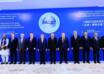
A signing ceremony for the Convention on the Establishment of the International Organization for Mediation was held in the Hong Kong Special Administrative Region on Friday, with 33 countries joining as founding members.
Pakistan’s Deputy Prime Minister and Foreign Minister Mohammad Ishaq Dar signed the deal on behalf of his country. He called China’s initiative timely, saying it represents an important step toward strengthening the multilateral system.
In an exclusive interview with China Daily on Saturday, Ambassador Hashmi said Hong Kong has strong credentials to be an international mediation center.
“Disagreements and disputes are inevitable, but it is also possible to craft ways and means of conciliation, mediation, to resolve them.”
The establishment of the mediation body carries a distinct Chinese footprint — harmony, he said.
“At the core of things, it is harmony — bringing people together… At the end of the day, we are one family.
“While disagreements will continue to arise, it is also possible to mediate those differences to resolve them.”
The organization’s biggest value addition is the creation of a unique, state-to-state mediation platform, he said.
The United Nations possesses a mandate for conciliation, mediation, and the provision of good offices, as primarily outlined in Article 33 of the UN Charter. “For that, UN secretary generals have been appointing special envoys for specific situations, but the international community backed a full-fledged organization,” Hashmi said.
The organization fills the gap and offers a new platform with the necessary tools to facilitate mediation — not only between states, but also between states and commercial entities, he said.
Unique value
It provides a platform for resolving commercial and trade-related disputes, its unique value lying in the ability to pool resources and offer comprehensive mediation services, he said. This makes it a significant addition to existing dispute resolution mechanisms, he added.
Looking ahead, Hashmi expressed confidence in the organization’s growth, expecting the number of signatory countries to double in the near future.
He also praised the wider Guangdong-Hong Kong-Macao Greater Bay Area, calling it a dynamic region that has truly driven progress. “It has played a significant role, first and foremost, in its connectivity — it has become a new engine of growth.”
As the Belt and Road Initiative — particularly one of its flagship projects, the China-Pakistan Economic Corridor — entered its second decade, the focus remains on connectivity while expanding to include green technologies, digital innovation and agriculture, Hashmi said.
Therefore, he said he would explore opportunities for collaboration among Hong Kong, the broader Greater Bay Area, and Pakistan within the framework of the BRI where they have complementary strengths — such as the digital economy.
Pakistan’s young population with English language skills and IT knowledge is seen as complementing the Greater Bay Area’s resources in finance, technology and management practices, Hashmi said.
At a public event last month, Speaker of Pakistan’s National Assembly Sardar Ayaz Sadiq said the multibillion-dollar China-Pakistan Economic Corridor has modernized Pakistan’s energy and infrastructure sectors, boosted regional connectivity, and attracted growing interest from Central Asian and East European countries.
Highlighting fruitful achievements, Hashmi said China and Pakistan have agreed to expand the CPEC to include Afghanistan.
This, above all, offers new economic opportunities and hopes to the more than 40 million Afghan people who have endured decades of hardship, he said.
“Going forward, sky is the limit,” he said, referring to the CPEC’s future potential.
Pakistani university eyes first AI hospital with Chinese firm
A Pakistani university is seeking to establish what it hopes will be the country’s f…
KU proposes Pakistan-China museum, AI & cybersecurity centre
The University of Karachi (KU) has proposed establishing a Pakistan-China Centre for Artificial Intelligence …