


The Digital Silk Road: How CPEC is Revolutionizing Pakistan’s Tech Landscape

In the bustling tech hub of Islamabad’s newly established Special Technology Zone, software engineers huddle around their workstations, collaborating with their Chinese counterparts via high-speed fiber optic connections that simply didn’t exist five years ago. This scene, increasingly common across Pakistan’s major cities, exemplifies the profound transformation taking place in the country’s technology sector, driven by one of the most ambitious economic initiatives of the 21st century: The China-Pakistan Economic Corridor (CPEC).
The Dawn of a Digital Era
 When CPEC was first announced, most discussions centered around highways, railways, and energy projects. However, beneath the surface of these physical infrastructure developments, a digital revolution has been quietly taking shape. The installation of an 820-kilometer fiber optic cable from Khunjerab to Islamabad marks just the beginning of what experts are calling Pakistan’s “Digital Silk Road.”
“We’re witnessing the birth of a new digital ecosystem,” says Mohammad Khalid, CEO of a leading software house in Lahore. “CPEC isn’t just about moving goods; it’s about moving data, ideas, and innovations across borders at unprecedented speeds.”
From Silicon Valley to Digital Corridor
 Pakistan’s software industry has long been a sleeping giant. With over 300,000 IT professionals and 25,000 new IT graduates annually, the country has always possessed the human capital needed for a digital revolution. What it lacked was the infrastructure and international connections to fully leverage this potential. CPEC is changing that equation dramatically.
The emergence of Special Technology Zones across major cities tells only part of the story. These zones, equipped with state-of-the-art facilities and high-speed internet connectivity, are becoming breeding grounds for innovation. But the real transformation lies in how these zones are connecting Pakistan’s tech talent with opportunities across Asia and beyond.
With increased foreign investments and strategic partnerships, Pakistan’s software exports have seen unprecedented growth, attracting global tech giants and venture capitalists. The rise of digital payment solutions, cloud computing services, and AI-driven enterprises is not only fueling the local economy but also positioning Pakistan as a key player in the global digital landscape. As the country continues to enhance its regulatory framework and cybersecurity measures, the foundation for a thriving, internationally competitive tech ecosystem is stronger than ever.
A Tale of Two Industries
| Metric | Pre-CPEC (2015) | Current (2024) | Projected (2035) |
| IT Exports (USD) | ~$2.5 billion | ~$3.5 billion (2023-24 est.) | ~$15-20 billion |
| Software Houses | ~2,000 | ~5,000+ | ~15,000+ |
| Freelancers | ~150,000 | ~1.5 million | ~5 million |
| Startup Ecosystem | Nascent (few incubators) | Over 1,000 startups, multiple incubators & VC funds | Matured ecosystem with global integration |
| Govt. Initiatives | Limited (PSEB, few incentives) | Tech parks, tax exemptions, STZs, digital banking | AI, blockchain, and deep-tech policy frameworks |
| Internet Penetration | ~15% | ~60%+ (fiber & 4G/5G rollout) | ~90% with advanced digital infrastructure |
| Foreign Investments | Minimal | Growing (Middle East, China, US VCs) | Large-scale investments from global tech giants |
| Education & Training | Few CS programs, limited tech training | Expansion in STEM fields, coding bootcamps | AI/ML & quantum computing-focused curricula |
| CPEC Impact | Just beginning | Boosted digital connectivity, fiber optic expansion | AI-driven industrial automation & smart cities |
The contrast between Pakistan’s pre-CPEC software industry and its current state is stark. In 2015, the country’s software exports barely crossed $1 billion. Today, that figure has multiplied several times over, with projections suggesting it could reach $10 billion by 2030. This growth isn’t just about numbers – it represents a fundamental shift in the nature of work being undertaken by Pakistani software houses.
The Innovation Catalyst
One of the most fascinating aspects of CPEC’s impact on Pakistan’s software industry is how it’s catalyzing innovation in unexpected ways. Take the case of Green Technologies, a Karachi-based startup that began by developing simple inventory management systems. Through collaboration with Chinese tech firms facilitated by CPEC initiatives, they’re now pioneering AI-driven solutions for sustainable urban development.
[Suggested Sidebar: Success story of Green Technologies with quotes from the founders and photos of their team working on smart city projects]Beyond Traditional Software
The impact of CPEC extends far beyond traditional software development. In cities like Lahore and Islamabad, a new breed of tech companies is emerging, focusing on:
[Suggested Illustration: Full-page spread showing interconnected digital ecosystems]Smart City Solutions: Pakistani developers are creating sophisticated urban management systems, learning from Chinese expertise in cities like Shenzhen and Shanghai. These solutions integrate everything from traffic management to waste disposal, powered by AI and IoT technologies.
Artificial Intelligence: The corridor has opened up unprecedented access to big data and processing capabilities, enabling Pakistani firms to develop advanced AI solutions. Companies are now working on everything from facial recognition systems to predictive maintenance software for CPEC infrastructure projects.
E-commerce Revolution: Cross-border digital payment solutions and logistics platforms are transforming how Pakistani businesses operate, creating new opportunities for software developers to build innovative e-commerce solutions.
The Human Element
[Suggested Photo Essay: Series of portraits featuring Pakistani tech entrepreneurs, developers, and students benefiting from CPEC initiatives]Behind the impressive statistics and technological achievements, there’s a deeply human story unfolding. Young Pakistani developers are finding new opportunities to work on cutting-edge projects without leaving their homeland. “Five years ago, I was planning to move abroad for better opportunities,” says Ayesha Malik, a software engineer in Islamabad. “Now, I’m leading a team developing AI solutions for smart city projects right here in Pakistan.”
Challenges and Opportunities
 The transformation hasn’t been without its challenges. Cybersecurity concerns, data privacy issues, and the need to compete with more established tech sectors are all very real concerns. However, these challenges are driving innovation in their own right, pushing Pakistani companies to develop more sophisticated solutions and adopt international best practices.
Looking Ahead: The Next Decade
[Suggested Visualization: Future technology trend predictions with probability indicators and potential impact assessments]As we look toward 2035, the future of Pakistan’s software industry appears increasingly intertwined with CPEC’s evolution. Experts predict the emergence of new technology clusters, particularly in areas like:
Quantum Computing: Joint research initiatives with Chinese institutions are laying the groundwork for quantum computing capabilities.
Green Technology: Software solutions for environmental monitoring and sustainable development are becoming increasingly important.
Blockchain Applications: Cross-border trade and financial systems built on blockchain technology are set to revolutionize regional commerce.
The Global Perspective
 Pakistan’s transformation through CPEC is drawing attention from beyond Asia. Global tech giants are increasingly looking at Pakistan not just as a source of talented developers, but as a potential market and development hub in its own right.
Conclusion: A Digital Future Unveiled
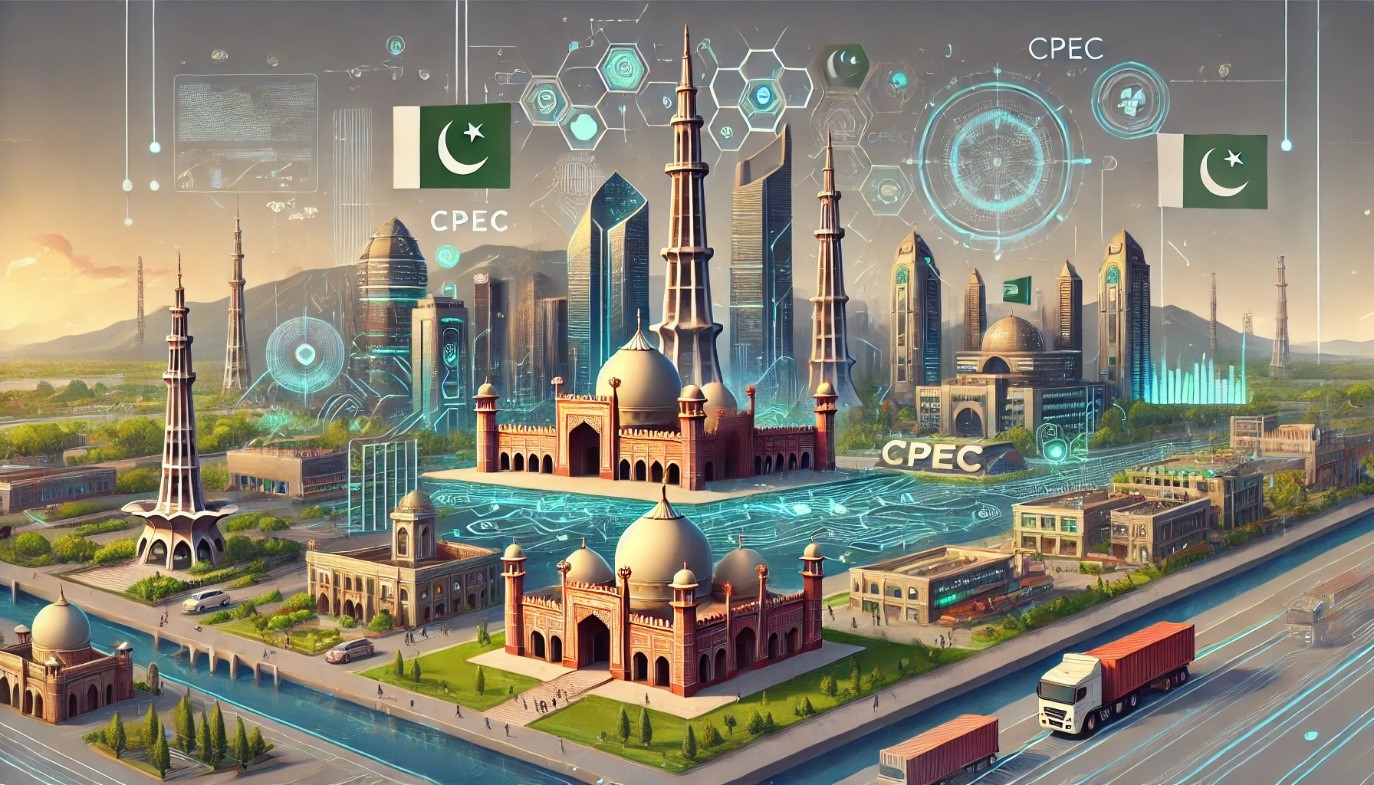 As the physical corridors of CPEC continue to take shape, it’s the digital corridors that may ultimately prove most transformative for Pakistan’s economy. The software industry, empowered by improved infrastructure and international connections, stands at the forefront of this transformation.
The story of CPEC and Pakistan’s software industry is still being written, but one thing is clear: the digital silk road is paving the way for a future where Pakistan’s tech talent can compete on the global stage, powered by the infrastructure and connections that CPEC provides.
- Projected software exports by 2030: $10+ billion
- Expected new IT jobs created: 100,000+
- Planned technology parks: 15 across major cities
- Expected foreign direct investment in tech sector: $5+ billion
Author:
 Muhammad Humair Noor
CEO FavActs
24 years of international Software Industry experience




Ambassador Khalil Hashmi says Chinese AI can benefit developing world
BEIJING – Pakistan’s Ambassador to China Khalil Hashmi said that Chinese Artificial Intelligence (AI) …