


11th JCC meeting sets framework for knowledge-based economy under CPEC phase 2
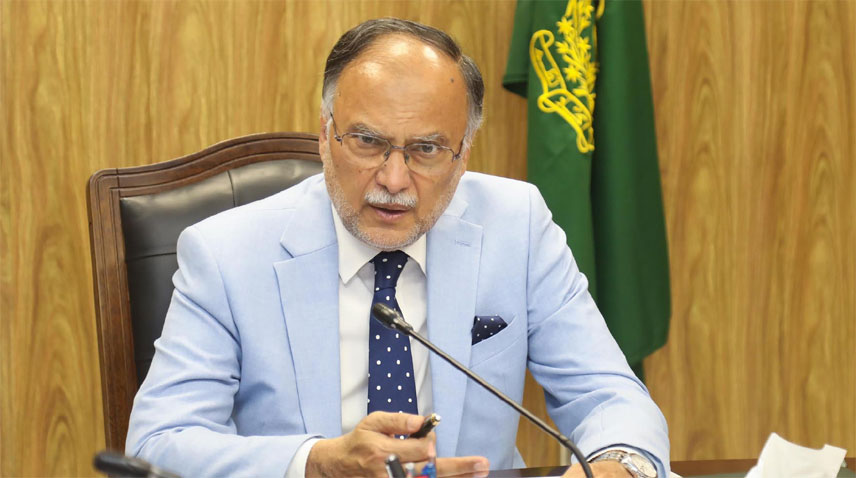
Federal Minister for Planning Ahsan Iqbal announced in Beijing that the second phase of CPEC has formally begun, with a key focus on creating a mineral corridor to link Balochistan’s resources with Gwadar Port. Speaking at the 11th CPEC Joint Cooperation Committee meeting and the Beijing Investment Conference, he said Phase 2 will emphasize business-to-business cooperation, aligned with Pakistan’s “Uraan Pakistan” vision of becoming a $1 trillion economy by 2035. The new phase will focus on exports, digital economy, renewable energy, regional connectivity, and mineral development, while also investing in youth through scholarships, technical education, and vocational training. Agreements were reached to advance the Karakoram Highway project and operationalize the mineral corridor, alongside cooperation in poverty reduction and sustainable development.
BEIJING: Federal Minister for Planning Ahsan Iqbal has announced that a new corridor will be developed to connect Balochistan’s vast mineral wealth with Gwadar Port as part of the second phase of the China-Pakistan Economic Corridor (CPEC).
Speaking to journalists in Beijing, the minister said he was honoured to chair the 11th meeting of the CPEC Joint Cooperation Committee, which marked the formal launch of Phase 2 of the initiative.
He described the Beijing Investment Conference as the starting point of a new journey under the “Uraan Pakistan” vision, which aims to transform the country into a one-trillion-dollar economy by 2035.
According to him, the various strands of CPEC will be aligned with this broader framework to deliver long-term growth.
Iqbal explained that the second phase of CPEC will shift its emphasis from government-to-government initiatives to business-to-business cooperation, with Pakistan providing a favourable environment for Chinese firms to invest.
He highlighted that this phase will revolve around five thematic areas: expanding exports and accelerating economic growth, drawing on China’s technological expertise to build a digital economy, strengthening cooperation on renewable energy and climate change, improving transport infrastructure to enhance regional connectivity, and developing a mineral corridor to link Balochistan’s resources with Gwadar.
He stressed that Pakistan’s young population will be placed at the centre of these efforts. As part of the plan, 10,000 Pakistani students are expected to pursue doctoral studies in fifty leading Chinese universities over the next decade in fields such as engineering, information technology and emerging sciences.
Training in these disciplines, he said, will lay the foundation for a modern, knowledge-based economy capable of driving an economic transformation within the next two decades.
The minister added that the discussions also included cooperation on technical and vocational education, poverty reduction, and sustainable development. He noted that Pakistan intends to learn from China’s success in lifting millions out of poverty.
Agreements were also reached to accelerate work on the second phase of the Karakoram Highway and to operationalise the proposed mineral corridor that would channel Balochistan’s mineral output to Gwadar for international trade.

CM Maryam Nawaz unveils tech-focused vision for Punjab’s youth
(Dunya News) – Punjab Chief Minister Maryam Nawaz Sharif has highlighted technology,…

Pakistan explores partnerships with Chinese robotic enterprises at Beijing’s conference
The 2026 World Robot Conference (WRC 2026), held here at the Beiren Etrong International …