
International experts convene in Karamay to discuss energy transition, culture-tourism integration, and AI-era journalism

The international cultural communication event held on November 13 in Karamay featured three thematic salons that brought together global experts, scholars, industry leaders, and media professionals for in-depth dialogues on ESG and green energy transition, the integrated development of culture–sports–tourism, and the authenticity of news in the AI era. Discussions highlighted Karamay’s commitment to sustainable development, with experts sharing insights on low-carbon technologies, digital empowerment, and urban planning. Another session explored ways to transform Karamay’s rich industrial heritage, sports events, and artistic creativity into integrated cultural and tourism assets that enhance the city’s influence. The final salon focused on media ethics in the age of artificial intelligence, where international journalists emphasized balancing technological advancement with human judgment, strengthening fact-checking, and safeguarding journalistic integrity. Collectively, the exchanges built consensus on innovation-driven, sustainable, and culturally enriched development for Karamay.
On November 13, as the “Gathering in the Oil City, Enjoying the City, and Celebrating the Charm of Our Sister Cities” international cultural communication event kicked off in Karamay, three high-quality salons focusing on cutting-edge issues were held in succession. Experts, scholars, industry leaders, and media representatives from around the world gathered in the oil city to engage in in-depth dialogues on major topics such as ESG and energy transition, the integrated development of culture, sports, and tourism, and the authenticity of news in the era of artificial intelligence. Through the collision of ideas, they explored the path to high-quality development and forged a consensus on development through the exchange of wisdom.
Focus on green transformation
ESG Concept Leads Energy Industry Transformation
On the morning of November 13, a seminar and salon themed “Practicing ESG Concepts, Promoting Green Energy Transition, and Accelerating the Development of New Productivity” was successfully held.
The salon was hosted by Zhang Lili, President of the Shanghai Overseas Economic and Technological Promotion Association. In his opening remarks, he stated that ESG is not only a manifestation of corporate social responsibility, but also a strategic fulcrum for driving industrial innovation and enhancing core competitiveness. For an important energy city like Karamay, deeply integrating ESG principles into its development strategy is the only way to achieve high-quality development.
The ESG concept is a core framework for measuring the performance and sustainability of businesses or investments across three non-financial areas: environment, society, and governance. During the exchange, the moderator and guests engaged in in-depth discussions on the topic of “How ESG can reshape the industrial chain and stimulate new productivity.”
Dr. Xu Yubing, a leading figure in the domestic CCUS field and chairman of Xinjiang Dunhua Green Carbon Technology Co., Ltd., shared his experience in cultivating low-carbon technologies and introduced the company’s firm commitment to promoting the innovation and industrialization of green technologies such as carbon dioxide capture, utilization and storage, using technology to help achieve the “dual carbon” goal.
Fan Yuxin, chief technical expert of Xinjiang Oilfield Company’s surface engineering and new energy enterprise, who has been engaged in scientific research in the energy field for more than 30 years, introduced Xinjiang Oilfield’s strategic layout and technological exploration in the field of new energy, focusing on the green transformation of traditional oil and gas enterprises, and shared the company’s thinking on the path of transformation from traditional oil and gas development to comprehensive energy supplier.
Wang Tao, General Manager of Karamay Carbon and Network Technology Co., Ltd., introduced how digital technology can be used to empower carbon management and improve energy efficiency, focusing on green computing power and digital transformation. He stated that the company’s development direction of energy conservation and carbon reduction, and enhancing computing power, is highly compatible with Karamay’s “one main industry and multiple diversified industries” modern industrial system, and will give “smart wings” to green development.
Dong Yan, Deputy Manager and Senior Economist of the Business Management Department of the Industrial Finance Company Department at Kunlun Bank, analyzed the potential advantages and future directions of Chinese enterprises in ESG ratings under the global ESG investment wave from a professional perspective of green finance innovation. She also elaborated on how finance can empower the green and low-carbon transformation of the energy industry chain through customized services.
Jin Dongxiao, deputy chief planner of the China Academy of Urban Planning and Design and an expert enjoying special allowances from the State Council, discussed the planning and path of resource-based cities in green transformation from a macro perspective. He emphasized the necessity of coordinated development of industry, city and population, and provided top-level design ideas for the sustainable development of cities such as Karamay.
In the subsequent exchange session, the participants engaged in in-depth discussions on topics such as technological bottlenecks, market mechanisms, and policy coordination. Their views inspired each other, and consensus was reached through continuous exchanges.
In his concluding remarks, Zhang Lili remarked that the greatest gain from this exchange was bringing together experts from different fields to jointly chart a blueprint for the urban and economic development of Karamay. This cross-disciplinary collision of ideas provided valuable multi-dimensional perspectives for urban strategic decision-making.
Xu Yubing said after the meeting: “Karamay City has deeply integrated ESG and sustainable development into its policy-making, governance system and operating rules, and its level of attention is impressive. Its practice under the ‘dual carbon’ target is not only leading in China, but also has a forward-looking vision on a global scale, representing the future direction of new productivity and human sustainable development.”
Focusing on the integration of culture and tourism
Diversified business formats activate new momentum for urban development
On the afternoon of November 13, a themed salon entitled “Culture as the Soul, Sports as the Empowerment, and Tourism as the Platform: Exploring New Paths for the Integration of Culture, Sports and Tourism” was successfully held.
The salon brought together experts and scholars from the fields of cultural heritage, sports, and artistic creation, as well as local cultural and tourism figures, to offer suggestions for Karamay’s cultural, sports, and tourism industries to move from “resource superposition” to “deep integration.”
Currently, Karamay’s urban brand as a “Fashion Capital of Wilderness Journey” is becoming increasingly prominent. The World Devil City, the scenic beauty of the Duku Highway, the rich history of the petroleum industry, and emerging industries such as low-altitude flights and motorsports collectively constitute Karamay’s unique cultural and tourism landscape. This salon aims to pool wisdom, explore new paths for integration, and promote industrial transformation and upgrading.
During the guest sharing session, four core guests presented cutting-edge theoretical perspectives and rich practical cases.
Professor Xu Jian, Vice Dean of the School of Cultural Heritage and Information Management at Shanghai University, delivered a speech entitled “Three Connotations of Industrial History and the Path to Heritage Resource Development.” He provided an in-depth analysis of the multiple values of industrial heritage, offering a clear theoretical framework and an operable transformation path for Karamay to transform its rich petroleum industry memories into unique and high-quality cultural and tourism resources. This speech offers important insights for revitalizing industrial heritage and creating distinctive IPs.
Kong Jianling, General Manager of Nanjing Shanpao Holdings Xinjiang Company, shared her extensive experience in event operation in a presentation titled “From ‘Oil City’ to ‘Tourism City’: How the Karamay Marathon is Running a New Track of Cultural, Sports, and Tourism Integration.” Through specific examples, she illustrated how sports events can effectively attract crowds and drive consumption, converting “event traffic” into “tourism retention.” She also offered suggestions for developing more distinctive sports and tourism integration projects in Karamay. During the interactive session, she further shared specific ideas on extending the cultural and tourism consumption chain and enhancing the runners’ in-depth experience.
Professor Yu Yang, Director of the Department of Music Engineering at the Shanghai Conservatory of Music, discussed “How High-Quality Creations Can Activate Cultural Tourism IPs and Amplify Urban Influence” from the perspective of artistic creation through a video presentation. He explained how art forms such as music can become an effective link connecting tourists with the city’s emotions. Through the creation and dissemination of high-quality content, a more vibrant and moving cultural vitality can be injected into the “Wilderness Journey Fashion Capital,” thereby significantly enhancing the city’s influence and attractiveness.
Professor Viniela Mambetalievna from Kyrgyz National Technical University brought a unique international perspective. Drawing on her experience visiting Karamay, she shared Kyrgyzstan’s practical experience in integrating gastronomy and tourism, opening up new avenues for cross-border cultural and tourism cooperation for the audience and promoting the exchange and mutual learning of cultural and tourism development experiences between China and other countries.
Following the expert presentations, Huang Shiyong, President of the Karamay Culture and Tourism Association, delivered a speech. He analyzed the current state and future direction of Karamay’s cultural tourism development from the perspective of industrial resource integration and service quality upgrading. He clarified the importance of efficient resource integration and refined services for cultivating the city’s intellectual property and promoting integrated development, providing localized practical guidance for the salon’s topics.
The salon was lively, with a constant exchange of ideas. Participants expressed that the insightful opinions of the guests broadened their horizons and built consensus for the deep integration of culture, sports, and tourism in Karamay. They believe that with the joint efforts of all parties, Karamay will further enhance its reputation as a “Fashion Capital of Wilderness Journeys,” becoming a distinctive benchmark for the integrated development of culture, sports, and tourism in northern Xinjiang and beyond.
Focus on the truth of news
Global media discuss responsibility in the AI era
On the afternoon of November 13, a salon on the theme of “How to Uphold the Truthfulness of News in the Global Artificial Intelligence Era” was successfully held.
Media journalists from countries such as Russia, Egypt, and Pakistan, along with representatives from government departments of international sister cities, industry experts, and young media professionals, gathered to discuss the contemporary significance and practical pathways of journalistic authenticity, focusing on the opportunities and challenges brought by artificial intelligence technology.
In recent years, while artificial intelligence technology has improved the efficiency of news production, it has also brought new risks such as misinformation and deepfakes. How to uphold journalistic integrity in this context has become a crucial issue facing media outlets worldwide.
This salon brought together heads of media organizations and senior practitioners from various countries. Ten guests, including Mian Abrar Hussein, editor-in-chief of Pakistan Today, Khalid Mehran, editor-in-chief of Egypt’s Al-Yawm Al-Ahram, and Zainati Said, a senior reporter at the Algerian International News Center, spoke in turn.
The attendees unanimously agreed that artificial intelligence is reshaping the entire news production process. From data mining and multilingual translation to automated writing, AI has greatly improved the efficiency of information dissemination, but it has also made problems such as false content, algorithmic bias, and deepfakes increasingly prominent.
During discussions on countermeasures, several guests emphasized the importance of “technology empowerment, ethics first.” Asghar Mohammed, head of the Associated Press of Pakistan’s China office, stated that AI can assist in information processing but cannot replace human judgment or bear moral responsibility. He called for the establishment of a cross-border fact-checking cooperation mechanism to improve the transparency of AI use in news production. Khalid Sayim, senior media consultant for Saudi Arabia’s Al-Okaz newspaper, believes that news is not only the transmission of information but also an expression of humanity. “Machines can organize words and sentences, but only humans can give them meaning,” he said.
Khaled Mehran, editor-in-chief of Egypt’s Al-Yedioth Ahronoth newspaper, stated that, to his knowledge, over 1,500 news websites already rely entirely on AI. The lack of human oversight not only undermines professional standards but also erodes public trust. He argued that media organizations must clearly define the boundaries of AI applications and strike a balance between automation and human review.
Zainati Said, a senior journalist at the Algerian International Press Center, stated that the media is facing a dual battle: combating technological fabrication and rebuilding public trust. He suggested addressing the challenges systematically by developing digital verification tools, enhancing journalists’ digital literacy, and establishing up-to-date codes of professional ethics. Ye Xinxin, a representative of young Egyptian media professionals, proposed from a cross-cultural communication perspective that, in the context of global information flow, media professionals should strive for “triple accuracy” in language, culture, and facts, using professionalism to build bridges of trust.
Li Wuzhou, deputy director of the Center for Western Europe and Africa Communication (China Today Magazine) of the China Foreign Languages Publishing Administration, summarized and commented that artificial intelligence is a double-edged sword, improving efficiency while also bringing ethical risks. The truthfulness of news reporting is not only a professional standard but also a social responsibility in the technological age. He called on the international community to strengthen cooperation and jointly build a transparent and credible information ecosystem, ensuring that technology truly serves the truth.
The salon concluded amidst lively discussions. All parties agreed that in today’s rapidly evolving technological landscape, human judgment, responsibility, and conscience remain the irreplaceable soul of journalism. Only by upholding truth, strengthening collaboration, and making wise use of technology can we safeguard the dignity and mission of journalism amidst the global wave of artificial intelligence.
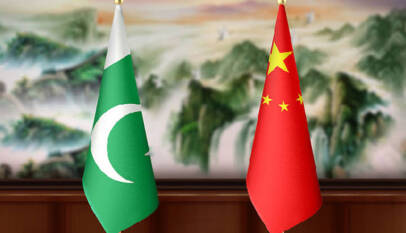
President for sustained Pakistan-China strategic trust, deeper economic cooperation
President Asif Ali Zardari on Tuesday said that Pakistan-China strategic mutual trust must…
President for sustained Pakistan-China strategic trust, deeper economic cooperation
President Asif Ali Zardari on Tuesday said that Pakistan-China strategic mutual trust must be …