

Chinese, Pakistani researchers explore new frontiers of bilateral cooperation
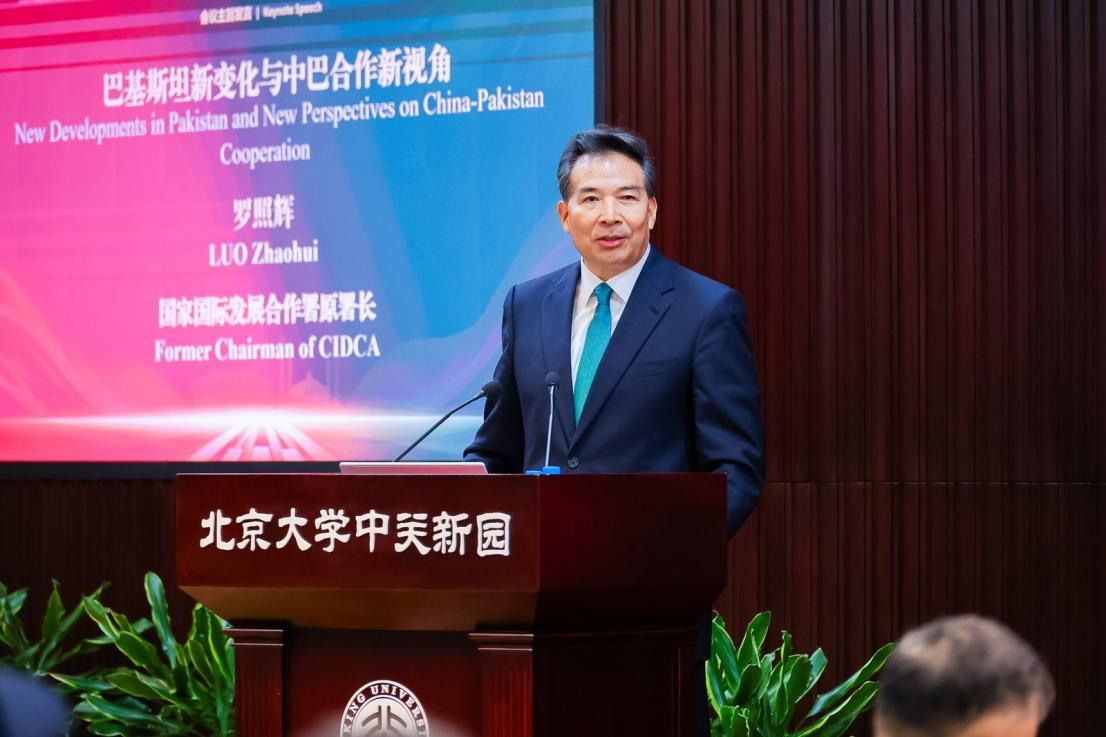
Chinese and Pakistani scholars, diplomats, researchers and business leaders at a symposium at Peking University marked the 75th anniversary of China-Pakistan diplomatic relations by exploring new cooperation in technology, renewable energy, agriculture, trade and human development. Speakers highlighted growing business-to-business engagement, CPEC’s expanding role, major investment agreements, renewable energy projects, agricultural partnerships and initiatives in education, women’s empowerment and digital skills. Participants stressed that future Pakistan-China cooperation should move beyond infrastructure and investment toward technology transfer, energy security, agricultural modernization and inclusive human development.
BEIJING, Sept 7: Chinese and Pakistani scholars, diplomats, researchers and business representatives have discussed new avenues for cooperation in technology, renewable energy, agriculture, trade and human development at an international academic symposium held at Peking University to mark the 75th anniversary of China-Pakistan diplomatic relations.
Around 100 participants from both countries attended the symposium, with speakers highlighting the growing role of business-to-business engagement and emerging opportunities under the China-Pakistan Economic Corridor (CPEC).
Pakistan’s Ambassador to China Khalil Hashmi said Chinese and Pakistani businesses had signed agreements worth more than $22 billion during the past two years. About $7 billion, or nearly 30 per cent, involved the relocation of enterprises.
He said technology was assuming an increasingly important role in bilateral ties, noting that four new Pakistan studies centres had been established in Shenzhen, Shandong, Hangzhou and Shenyang, with greater emphasis on fields including artificial intelligence and chemical technology.
Former Chairman of the China International Development Cooperation Agency Luo Zhaohui called for innovative approaches to development and deeper cooperation to support regional peace and economic growth.
Renewable energy emerged as another major area of discussion. Mao Keji of China’s National Development and Reform Commission said the green transition should be viewed not only as a means of reducing emissions but also as a tool for strengthening energy security.
Pakistan’s rapid expansion of solar power was highlighted during the discussions. By the end of May 2026, cumulative solar-panel imports had exceeded 55,700 megawatts. The State Bank of Pakistan estimates that replacing fossil-fuel generation with solar power could eventually reduce the country’s annual energy import bill by $5.2 billion to $7.8 billion.
China Three Gorges South Asia Investment Limited Assistant CEO Liu Yonggang said the Karot Hydropower Project was supplying electricity to around five million people. The project has generated more than 12 billion kilowatt-hours cumulatively and is estimated to save about 1.4 million tonnes of standard coal annually while reducing carbon dioxide emissions by roughly 3.5 million tonnes.
He said the company’s wind-power projects in Pakistan had reached a combined installed capacity of 150 megawatts, with cumulative generation of 3.2 billion kilowatt-hours.
Agriculture and provincial-level cooperation also featured prominently. Researchers said Chinese provinces including Xinjiang, Shaanxi and Hubei could share expertise with Pakistan in cotton production, desertification control, skills development, seeds and agricultural technology.
Sindh is exploring contract farming and export supply chains for products including chillies and mangoes, while Punjab is using demonstration farms to introduce technologies for hybrid rice, maize and cauliflower production. Gilgit-Baltistan has opportunities for border-market development, while Balochistan could attract investment in higher-value agricultural chains, cold storage and logistics.
The symposium also highlighted the social impact of bilateral cooperation, particularly in education and women’s empowerment. Researchers from Beijing Foreign Studies University said CPEC was evolving beyond infrastructure development into a broader platform for human development.
In Balochistan, school-assistance programmes have expanded from primary to secondary education, creating further study opportunities for around 550 girls. At the Gwadar Vocational and Technical Institute, girls represented nearly 44 per cent of the first intake, with training offered in areas including artificial intelligence and electronic commerce.
A planned Ban Mo College is expected to strengthen links between educational institutions and businesses and help develop locally based digital skills. The She Power initiative is also aimed at distributing hygiene kits to 70,000 girls and training teachers in personal hygiene.
Participants said the future of China-Pakistan cooperation would increasingly extend beyond investment, trade and infrastructure towards technology, energy security, agriculture, education and broader social development.
Charming Beijing television series premieres on PTV showcases China’s culture, modern development
BEIJING, Oct 22 (APP): The 2026 edition of the “Charming Beijing” television series premie…

Pakistan to launch first astronaut into space from China on Nov 25: Ahsan Iqbal
Planning Minister Ahsan Iqbal announced on Sunday that Pakistan’s first astronaut would embark on …