


China will always stand by Pakistan’s sovereignty and water security, says Chinese Analyst

Victor Gao, Vice President of the Center for China and Globalization, strongly emphasized that the Indus Waters Treaty must be upheld in both letter and spirit, warning India against using the Indus River as a tool of coercion or blackmail against Pakistan. In an interview with an Indian news outlet, he criticized unilateral actions to divert shared water resources and advocated for regional cooperation on water management. Reaffirming China’s “iron-clad friendship” with Pakistan, he stressed Beijing’s opposition to any attempts to undermine Pakistan’s rights under the treaty. Gao also highlighted China’s upstream position in South Asia’s river systems and called for a trilateral dialogue between China, India, and Pakistan to ensure equitable and sustainable use of both the Indus and Brahmaputra river systems. His remarks come amid rising tensions following India’s recent move to “hold in abeyance” the 1960 Indus Waters Treaty, a decision that Pakistan has warned could be considered an act of war.
Vice President of the Center for China and Globalization Victor Gao said the Indus Waters Treaty must be respected in letter and spirit, and warned against using water as a tool of coercion. “Never use the Indus River as blackmail against the people of Pakistan,” he remarked. “Do not do unto others what you do not want others to do unto you.”
In an interview with an Indian news channel, he called for regional cooperation on water sharing and criticised any unilateral moves to divert shared water resources.
He reaffirmed China’s commitment to its “iron-clad friendship” with Pakistan, stressing that Beijing will not tolerate any attempts to undermine Pakistan’s legitimate interests, particularly with regard to the peaceful use of Indus River waters under the long-standing treaty with India.
“China and India need to come up with a protocol so that the waters of the Brahmaputra can be better managed,” he said, referring to recent concerns over India’s river management policies. “This becomes more important in light of Indian government’s attempt to divert water from rivers to Pakistan.”
He underscored the geographical reality that most major rivers in South Asia originate in Tibet, placing China in a strategic position in terms of regional water diplomacy. “China is in the upper stream, India in the midstream. It is not appropriate for India to interfere unilaterally with shared waters,” he said.
Gao expressed hope that China, India, and Pakistan would be able to engage in dialogue on equitable water sharing in both the western (Indus) and eastern (Brahmaputra) river systems. “Only through mutual understanding and cooperation can the region ensure the sustainable and peaceful use of these vital resources,” he concluded.
The statement should be seen in the backdrop of India’s recent decision to “hold in abeyance” the Indus Waters Treaty (IWT), a 1960 World Bank-mediated agreement governing the distribution of the Indus river system’s resources. Under the treaty, Pakistan holds rights to the Indus, Jhelum, and Chenab rivers, while India controls the Ravi, Beas, and Sutlej rivers.
Islamabad has warned that any attempt by India to divert or obstruct Pakistan’s share of water would be treated as “an act of war,” with a commitment to employ all elements of national power in response.

China to deepen high-quality development, expand opening-up as ‘Two Sessions’ convene
BEIJING: China will continue to promote high-quality development and expand high-level ope…
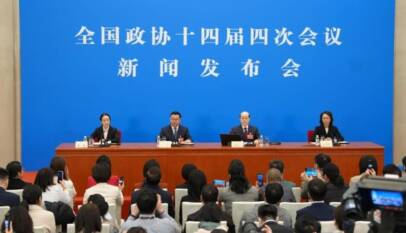
China to deepen high-quality development, expand opening-up as ‘Two Sessions’ convene
BEIJING: China will continue to promote high-quality development and expand high-level opening-up, positioning itself as …