
SCO’s role in the emerging multipolar order
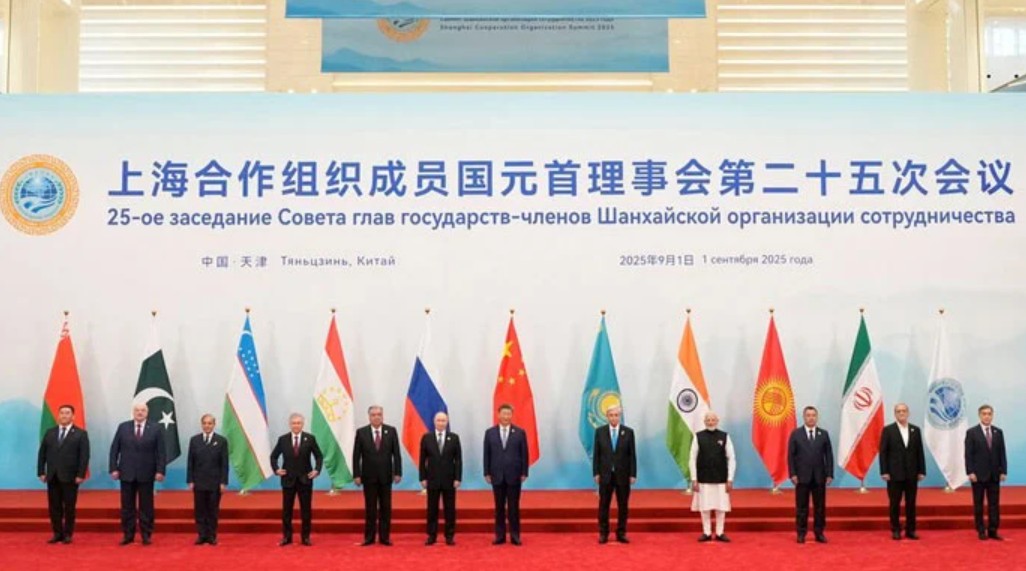
Mr. Shakeel Ahmad Ramay, Political Economist and a Visiting Research Fellow at Hebei University, China, writes that the upcoming Shanghai Cooperation Organization (SCO) Summit is being held amid growing geopolitical instability, weakening of the existing global order, and a shift toward a multipolar world. He argues that the SCO is increasingly important in this emerging order, particularly as its members face trade wars, sanctions, armed conflicts, and external pressure from the US and West. The summit is therefore expected to focus on economic cooperation, connectivity, energy, trade, and regional security, while addressing conflicts and external interference. Ramay argues that the SCO must reform and strengthen its role in two key areas. First, it should enhance its economic and financial mechanisms by finalizing the SCO Development Bank, Free Trade Agreement, and connectivity initiatives, while developing mechanisms to shield members from sanctions, trade restrictions, and technology bans. Second, the SCO should redefine its security cooperation and establish clearer mechanisms for responding to external aggression and conflicts involving member states. He concludes that although the SCO has upheld the “Shanghai Spirit,” deeper reforms are necessary for it to become a meaningful institution in the emerging multipolar global order and meet the expectations of the Global South.
The Shanghai Cooperation Organization (SCO) Summit is taking place amid a complex global landscape, a deteriorating security situation, and a fading global order. The global order has fractured under repeated shocks, including economic, security, social, and environmental shocks. These shocks have initiated irreversible changes, and the world is rapidly moving toward multipolarity. President Xi and President Putin have repeatedly highlighted this titanic shift in the global order. They have also reiterated the importance of a multipolar world, noting its emergence and necessity. President Xi considers it a key outcome of great changes unseen in a century. Simultaneously, they portray the SCO as a major player in the emerging multipolar order.
Therefore, the USA and the West have launched a multifaceted campaign against the SCO and its members. For example, the USA has launched a trade war against China, the SCO’s largest trading partner, with US$524 billion in tariffs. On the other hand, the USA and the West are trying to destabilize the SCO’s member countries by engaging or pushing them into wars and conflicts. The Russia-Ukraine war is the most prominent example. Moreover, four major SCO countries were involved in conflicts or wars in 2025. The war between nuclear powers, Pakistan and India, put the whole world on notice in 2025.
The world was still grappling with the shocks of 2025 when the USA attacked Iran in 2026. The war is affecting the entire Middle East, as Iran is attacking regional countries in retaliation for the USA’s attack. Furthermore, the closure of the Strait of Hormuz has created new economic challenges by disrupting trade in energy commodities and other raw materials. Energy prices have risen, complicating inflation and economic recovery. The war also has direct implications for China, as the region is a major oil exporter to China. Moreover, the West has successfully pushed the Russia-Ukraine war into a new phase after the Ukrainian attacks on Russian civil infrastructure.
Against this backdrop, the upcoming SCO Summit has taken on significant importance. A review of the proposed agenda indicates that Leaders are expected to deliberate on a broader range of issues, including energy, connectivity, and trade, but will focus primarily on the economy and security, including wars in the region and Eurasia and conflicts among members. They will also discuss external interference in the region and its implications for member countries.
However, the most important agenda item for leaders will be defining the SCO’s role in the emerging multipolar order. It is a critical question for the SCO for two reasons. First, the West views the SCO as a competitor to NATO, which is not true. However, the USA and the West, driven by this assumption, will continue to create problems for the SCO and its members. Thus, the SCO will have to answer: how will it respond to external interference and challenges in a multipolar world? Will it develop mechanisms to protect its members against aggression? Recent events in the region, such as the war in Iran and China-specific trade, underscore the importance of this question. Second, the Global South sees the SCO as an alternative to existing exploitative organizations and as a source of concrete economic opportunities. Thus, the Global South is pinning high hopes on its future role.
In this context, we have developed two suggestions for consideration. First, the SCO must strengthen its economic and development credentials. The SCO recognizes this reality and has already launched numerous initiatives to strengthen its economic dimensions, including the SCO Development Bank, talks on a Free Trade Agreement, agricultural cooperation, human capital, trade, technology sharing, connectivity, and a sustainable development strategy. However, the SCO needs to finalize the establishment of the SCO Bank, conclude the FTA, and establish Silk Route Stations, among other steps, as soon as possible. The SCO Development Bank should be a top priority, as many countries face a severe investment gap and economic and development challenges.
However, the SCO has no policies or mechanisms to protect its members from financial sanctions, trade wars, or technological bans. Right now, Russia and Iran are facing the worst economic, financial, trade, and technology sanctions. India is facing bullying, and the USA is imposing sanctions. Meanwhile, China faces trade wars and technology sanctions. China weathered the storm and came out a winner, but the challenge remains. The USA is also pushing other Western countries to join the USA and intensify trade and technology wars against China. Therefore, the SCO must develop mechanisms to protect members from trade wars and sanctions, especially financial sanctions.
Second, the SCO will need to redefine security, areas, and means of cooperation to achieve sustainable peace. Currently, the SCO focuses on terrorism, separatism, extremism, trafficking, and non-traditional issues such as climate change. However, the SCO remains silent on how it will respond if an SCO member is attacked by external forces or if one member attacks another. The Russia-Ukraine war, the attack on Iran by the USA, and the attack on Pakistan by India have further underscored the importance of this question. The Russia-Ukraine and Iran-USA wars are deeply affecting members across multiple fields, including the economy and security. The SCO has issued only statements and has not intervened to stop these wars.
It is extremely concerning for the Global South because the USA and the West have been violating the sovereignty of countries and engaging in regime-change operations. The most recent event is the regime change in Venezuela. Even now, the USA has begun to threaten Northern countries. This approach will create challenges for the SCO and may affect its potential expansion. Why? Because it will create an image of the SCO as unable to protect its members against bullying and attacks by the USA and the West.
In conclusion, based on the above discussion, it can be inferred that the SCO performed well by upholding the Shanghai Spirit. However, it’s time for the SCO to reform. Reforms are necessary to enable the SCO to play a meaningful role in an emerging multipolar world while adhering to the Shanghai Spirit.

Climate Expert Ali Tauqeer Sheikh calls for Green Finance focus in CPEC 2.0
AS Prime Minister Shehbaz Sharif travels to Beijing this week to mark 75 years of Pakistan…
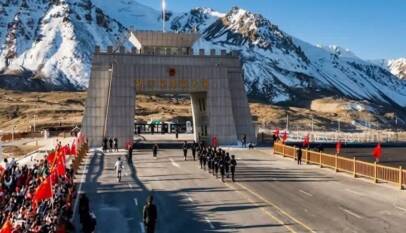
China’s National Day marked at Khunjerab Pass
GILGIT-BALTISTAN, Oct 4 (Gwadar Pro) – Thousands gathered at Khunjerab Pass on the Pakistan-China …